
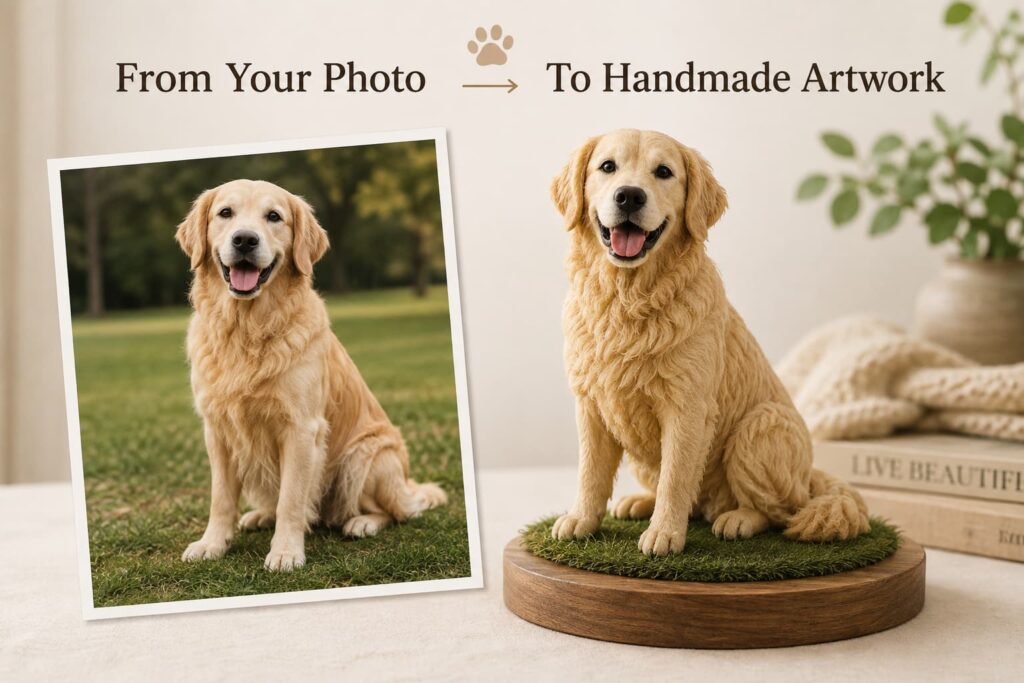
A favorite photo can capture a moment, but a handmade sculpture can turn that memory into something you can actually display and enjoy every day.
Custom pet sculptures offer a unique way to transform a photograph of a beloved dog, cat, or other companion into a three-dimensional piece of artwork. Instead of simply printing an image, an artist studies your pet’s appearance, pose, coloring, and distinctive features before recreating them by hand.
For pet owners looking for something more personal than a traditional photo frame, a custom pet sculpture can become a meaningful keepsake that reflects the personality of a special companion.
In this guide, we’ll explore how custom pet sculptures are made, what photos work best, what to consider when choosing a sculpture, and how this type of personalized pet keepsake can fit naturally into your home.
What Is a Custom Pet Sculpture?
A custom pet sculpture is a handmade three-dimensional representation of a real pet, created from photographs provided by the owner.
Unlike a standard photograph or printed portrait, a sculpture gives the pet physical form. The artist can recreate details such as the shape of the face, ears, body, markings, coloring, and characteristic pose.
Depending on the material and artistic style, custom pet sculptures can be made from materials such as polymer clay, wool, resin, or other sculpting materials.
The result is not intended to be an exact mechanical copy of a photograph. Instead, it is a handcrafted interpretation designed to capture the recognizable appearance and personality of the pet.
For someone who wants to turn a favorite photograph into something more tangible, this makes a custom pet sculpture an especially personal type of pet keepsake.
Why Choose a Handmade Pet Sculpture?
There are many ways to preserve memories of a pet, from photographs and framed portraits to photo books and personalized displays.
A sculpture offers something different: dimension, texture, and physical presence.
A photograph shows your pet from one particular viewpoint. A three-dimensional sculpture allows you to see the representation from different angles and appreciate details that are difficult to capture in a flat image.
It can also become part of your home’s everyday environment.
A sculpture displayed on a shelf, desk, bookcase, or side table can serve as a piece of personalized artwork rather than simply something stored away.
This makes custom pet sculptures suitable for many different situations:
- Celebrating a beloved pet
- Marking an adoption anniversary
- Creating a personalized birthday gift
- Remembering a special period of life
- Decorating a pet-friendly home
- Creating a unique keepsake from a favorite photograph
- Giving a meaningful gift to another pet lover
You also do not need to wait for a particular occasion to create one.
Sometimes the best keepsakes are simply the ones that celebrate the everyday relationship you have with your pet.
How Is a Custom Pet Sculpture Made?
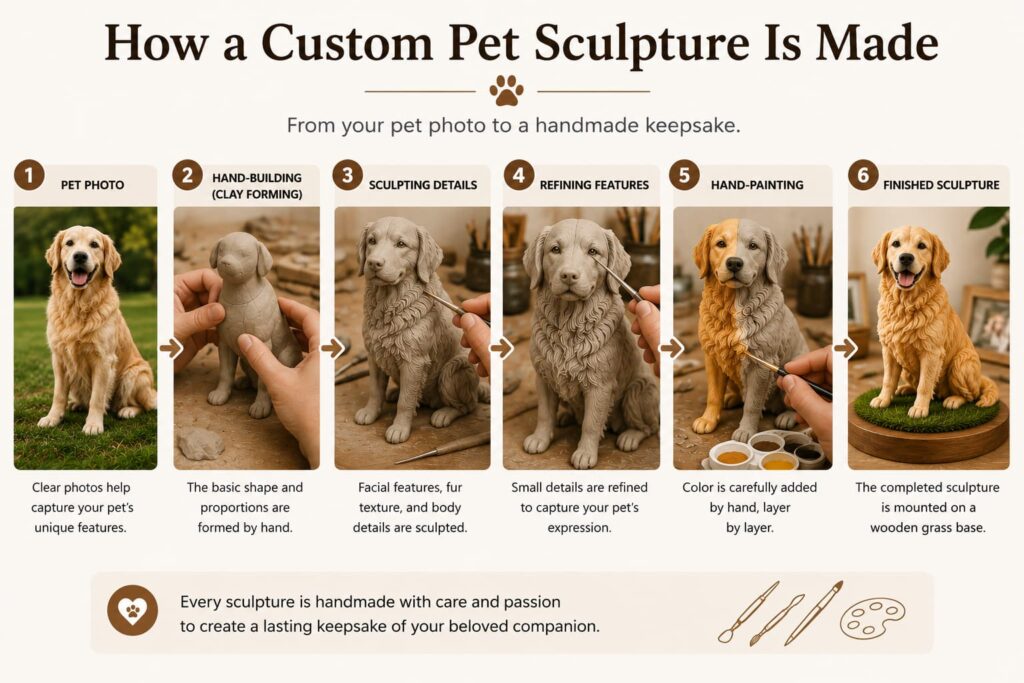
Creating a handmade pet sculpture is a very different process from printing a photograph.
The process usually begins with reference photographs.
The artist studies the photographs carefully to understand the pet’s proportions, facial features, markings, fur pattern, and overall appearance. A suitable pose is then selected based on the owner’s preferences and the reference images.
For a polymer clay sculpture, the artist gradually builds the shape by hand.
1. Studying the Reference Photos
The first step is understanding the individual characteristics that make the pet recognizable.
Two dogs of the same breed can have noticeably different facial shapes, body proportions, coloring, and expressions. The same is true for cats and other animals.
Important details may include:
- Face shape
- Ear position
- Eye shape and color
- Nose shape
- Fur coloring
- Distinctive markings
- Body proportions
- Tail position
- Typical sitting, standing, or lying pose
This is why good reference photographs are so important.
2. Building the Basic Form
The artist begins creating the basic three-dimensional structure of the pet.
At this stage, the focus is on proportions and overall shape rather than tiny details.
The head, body, legs, ears, and other major features need to be positioned correctly before the finer characteristics are added.
This stage creates the foundation for the final sculpture.
3. Adding Facial and Body Details
Once the main form is established, the artist begins refining the details.
The eyes, nose, mouth, ears, paws, and other recognizable features are carefully shaped.
Small differences in these areas can have a significant effect on how recognizable the final sculpture looks.
This is one of the reasons handmade sculptures can feel so personal: the artist is not simply applying a generic animal template.
The goal is to recreate the individual pet represented in the reference photographs.
4. Adding Color and Finishing Details
After the sculpted form has been completed, color and surface details are added to reproduce the pet’s distinctive appearance.
Patterns, markings, facial coloring, and other characteristics can be carefully recreated.
The final stage focuses on refining the sculpture and making sure the overall appearance feels balanced and recognizable.
The completed sculpture can then be placed on its display base and prepared as a finished keepsake.
What Photos Should You Provide for a Custom Pet Sculpture?
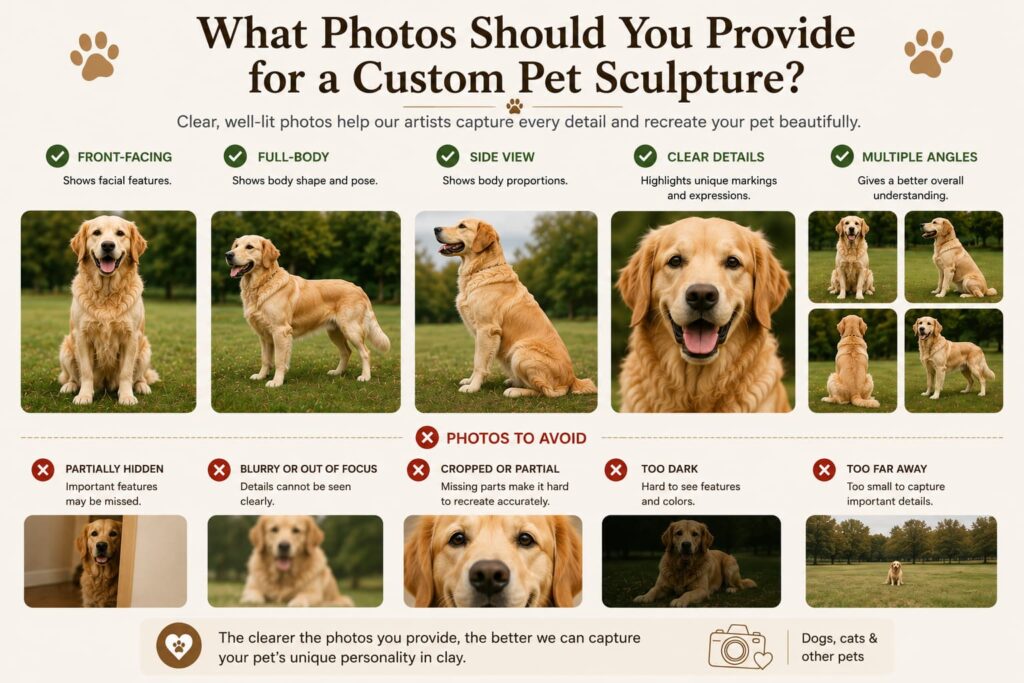
The quality of the reference photographs can make a significant difference.
You do not necessarily need a professional pet photograph. In many cases, clear everyday photographs can work very well as long as they show the features the artist needs to understand.
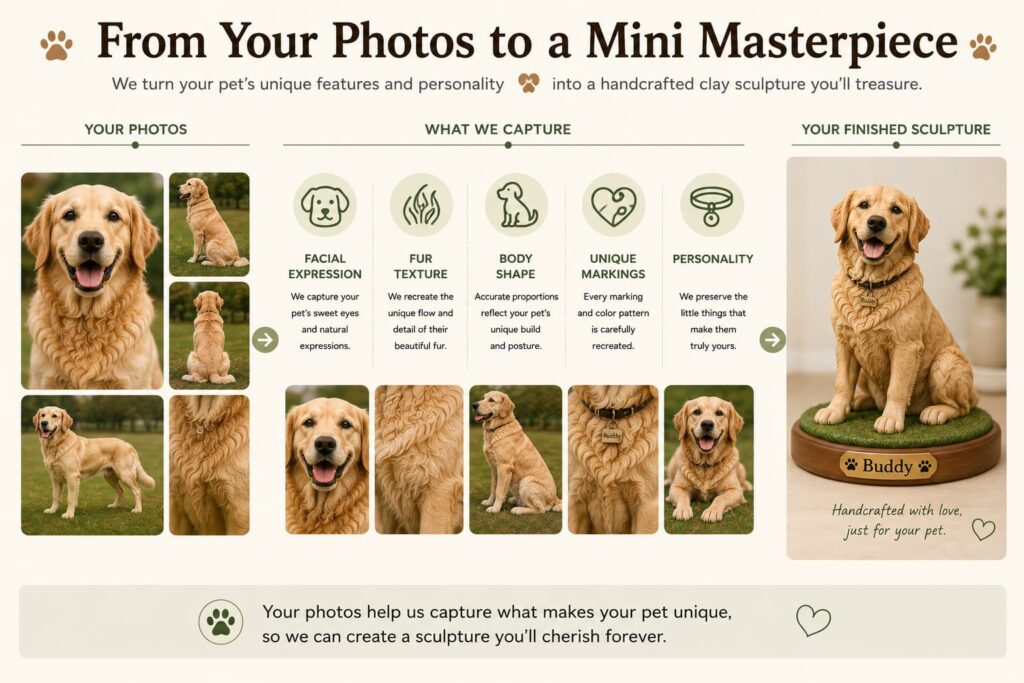
A Clear Front-Facing Photo
A clear front-facing photograph is usually one of the most useful reference images.
It allows the artist to study the face, eyes, nose, ears, and facial proportions.
If possible, choose a photograph where your pet is looking toward the camera and the face is not heavily covered by shadows, accessories, or other objects.
A Full-Body Photo
A full-body photograph is especially useful when the sculpture will reproduce a specific pose.
It helps the artist understand the overall proportions of the pet and the relationship between the head, body, legs, and tail.
For example, a sitting dog and a standing dog can have very different body proportions even when they are the same animal.
Side or Additional Photos
Side-view photographs can provide information that cannot be seen clearly from the front.
They can help show:
- Ear shape
- Snout length
- Back and body shape
- Tail position
- Leg proportions
- Fur patterns
Additional photographs from different angles are particularly useful when creating a detailed handmade sculpture.
Choose Photos That Show Your Pet Clearly
When selecting reference images, try to avoid photographs where:
- The pet is partially hidden
- The face is heavily blurred
- The body is cropped
- Lighting is extremely dark
- Accessories cover important features
- The pet is too far away from the camera
The more clearly the artist can see the pet, the easier it is to capture the details that make the sculpture recognizable.
Choosing the Right Pose for Your Sculpture
The pose is one of the most personal decisions when creating a custom pet sculpture.
You may want to recreate a pose that your pet was known for, such as sitting beside you, standing proudly, lying down, or looking toward the camera.
A familiar pose can make the finished piece feel much more connected to the individual pet.
Sitting
A sitting pose is a classic choice for dogs and cats.
It gives the sculpture a stable appearance and allows the face and body to remain clearly visible.
Standing
A standing pose can show more of the pet’s overall body shape and proportions.
This can be especially effective for larger dogs or pets with distinctive body markings.
Lying Down
A lying pose can create a more relaxed and natural feeling.
If your pet had a favorite sleeping position or a particular place where they liked to rest, recreating that pose can add an especially personal touch.
Ultimately, there is no single “best” pose.
The right choice is usually the pose that reminds you most strongly of your pet.
Polymer Clay Pet Sculptures: A Handmade Approach
Polymer clay is one material that can be used to create highly detailed handmade pet sculptures.
The material allows an artist to gradually build and refine the shape of the sculpture before adding color and finishing details.
Because the sculpture is handmade, each piece can have its own subtle characteristics.
That is part of the appeal.
A custom sculpture is not meant to look like something mass-produced. It is created specifically around one pet and one set of reference photographs.
For pet owners who appreciate handmade artwork, this combination of personalization and craftsmanship can make a sculpture feel more special than a standard decorative object.
How Large Should a Custom Pet Sculpture Be?
The ideal size depends on the pet’s pose, the type of display space you have, and how much visual presence you want the finished sculpture to have.
A smaller sculpture can work well on a desk, shelf, bedside table, or bookcase.
A larger sculpture can become a more prominent decorative piece in a living room or other display area.
It is also important to remember that the physical dimensions of a sculpture can depend on the pose.
For example, a standing or sitting pet may be measured primarily by height, while a lying pose can require a different approach because the animal extends horizontally.
Before ordering a custom sculpture, make sure you understand how the size is determined for the specific pose you choose.
Where Can You Display a Custom Pet Sculpture?
One advantage of a three-dimensional keepsake is that it can become part of your everyday home environment.
Some popular display locations include:
- Bookshelves
- Living room cabinets
- Desks
- Bedside tables
- Entryway shelves
- Home offices
- Pet corners
- Display cabinets
You can also place a sculpture next to framed photographs, other personalized keepsakes, or small objects associated with your pet.
This can gradually turn a single keepsake into a small collection of meaningful memories.
Custom Pet Sculpture as a Gift
A personalized pet sculpture can also make a thoughtful gift for someone who loves their pet.
Because the sculpture is based on the recipient’s actual pet, it feels more personal than a generic pet-themed gift.
It can work particularly well for occasions such as:
- Pet birthdays
- Adoption anniversaries
- Christmas
- Valentine’s Day
- Mother’s Day or Father’s Day
- Housewarming gifts
- Gifts for pet lovers
The most important part is personalization.
A gift that represents someone’s own pet can communicate much more than a generic decorative item.
Custom Pet Sculpture vs. Other Pet Keepsakes
A custom sculpture is only one way to preserve a meaningful pet memory.
Different keepsakes work better for different preferences.
| Keepsake Type | Best For |
|---|---|
| Framed Pet Portrait | A classic and simple display |
| 3D Crystal Pet Display | A dimensional and modern presentation |
| Custom Pet Sculpture | A tactile handmade representation |
| Personalized Wooden Frame | A warm and traditional home display |
| Photo Book | Preserving many photographs and stories |
| Memory Box | Keeping physical items together |
| Pet Journal | Recording stories and everyday memories |
There is also no reason to choose only one.
A framed photograph can sit beside a sculpture. A photo book can preserve the stories behind the images, while a three-dimensional keepsake provides a physical focal point for the collection.
If you are still deciding which type of keepsake is right for you, our guide to personalized pet keepsakes explores several different ways to preserve and display meaningful pet memories.
How to Make Your Sculpture Feel More Personal
The most meaningful custom sculptures usually begin with details that are specific to the individual pet.
Think beyond simply choosing a breed and color.
Consider:
Which pose immediately reminds you of your pet?
Maybe your dog always sat with its head slightly tilted.
Maybe your cat had a particular way of curling its tail.
Maybe your pet had a distinctive expression that appeared whenever you called its name.
These small characteristics can make the finished sculpture feel much more personal.
You can also think about where the sculpture will be displayed.
A sculpture designed for a home office might have a different visual presence from one intended for a living room shelf.
The goal is not simply to create a miniature animal.
The goal is to create a piece of artwork that reminds you of a particular pet and the relationship you share.
Custom Pet Sculpture as a Personalized Gift
A custom sculpture can be meaningful not only because it represents a specific pet, but also because it reflects the relationship between a pet and the person who loves them.
For this reason, it can be especially suitable for people looking for a personalized gift that feels unique rather than mass-produced.
Whether it is created for a birthday, adoption anniversary, holiday, or simply as a thoughtful surprise, the personal connection is what makes the gift memorable.
A Custom Pet Sculpture Can Be More Than a Memorial
Although personalized sculptures can certainly be created to remember a pet that has passed away, they do not have to be associated with loss.
A keepsake can also celebrate a pet that is still happily sleeping beside you.
You might create a sculpture to celebrate the day you adopted your pet, a special birthday, or simply the joy your companion brings to your everyday life.
This broader perspective is important because a personalized pet sculpture can be both a meaningful memory and a beautiful piece of home decor.
You do not need a sad occasion to create something meaningful.
Sometimes the best reason is simply:
“I love my pet and want to keep a little piece of that happiness around me.”
How to Order a Personalized Pet Sculpture
The process is usually straightforward.
First, choose the type and size of sculpture you want.
Next, select the pose you would like the artist to recreate.
Then provide your pet’s reference photographs.
A strong set of photographs normally includes one clear front-facing image along with additional photographs showing the side, back, or full body.
The artist can then use these references to create the sculpture.
Because handmade artwork requires time and careful attention, custom pet sculptures generally take longer to produce than standard personalized products.
That additional time is part of what makes the finished piece different from a mass-produced decoration.
Final Thoughts
A favorite photograph preserves a moment.
A handmade sculpture can turn that moment into something you can physically display, see, and appreciate every day.
Custom pet sculptures combine personalization, craftsmanship, and the recognizable details that make each pet unique. Whether you choose a sitting dog, a relaxed cat, or another beloved companion, the most important part is choosing a pose and reference photographs that genuinely represent your pet.
If you are looking for a personalized keepsake that feels more artistic and dimensional than a traditional photograph, a custom pet sculpture is worth considering.
And if you are still exploring different ways to preserve your pet memories, start with our guide to personalized pet keepsakes and discover which type of keepsake best matches your memories, your home, and your pet.