


Losing a pet can leave a surprisingly large space in someone’s life. For the person grieving, the loss is not simply about an animal no longer being at home. It can mean losing a companion, a daily routine, and a relationship that may have lasted for many years.
That can make it difficult to know what to say.
If someone you care about has lost a pet, you may worry about choosing the wrong words. You don’t need to find something profound or perfectly worded. Often, a simple and sincere message that acknowledges their loss is enough to let them know they are not alone.

What Makes a Pet Loss Sympathy Message Meaningful?
A thoughtful message doesn’t need to be long. What matters most is that it recognizes the person’s relationship with their pet rather than treating the loss as something they should quickly move past.
A meaningful message can:
- Acknowledge the loss directly
- Recognize how important the pet was
- Mention the pet by name when appropriate
- Recall a positive memory if you have one
- Let the person know you are thinking of them
- Offer support without putting pressure on them to respond
The American Veterinary Medical Association recognizes the unique bond people share with their pets and emphasizes that grief after losing a pet is a natural response to that loss. American Veterinary Medical Association’s Pet Loss & Grief guide
The goal isn’t to make the sadness disappear with a few words. It’s simply to say, “I see what you’re going through, and I care.”
Short Pet Loss Sympathy Messages
Sometimes a short message is the most appropriate choice, especially if you’re sending a text or writing a small card.
Here are some simple options:
- I’m so sorry for your loss. Thinking of you and your family.
- I’m so sorry about [Pet’s Name]. They were clearly very loved.
- Sending you love and comfort as you remember [Pet’s Name].
- My heart goes out to you during this difficult time.
- I’m thinking of you and remembering what a special companion [Pet’s Name] was.
- I’m so sorry you’re going through this. I’m here for you.
- Wishing you comfort in all the happy memories you shared with [Pet’s Name].
- [Pet’s Name] was lucky to have been so deeply loved.
- Thinking of you and sending my heartfelt sympathy.
- I’m sorry for the loss of such a special member of your family.
A short message doesn’t mean you care less. In many situations, a few genuine words are more comforting than a long message that doesn’t sound like you.

Heartfelt Pet Loss Sympathy Messages
If you knew the person and their pet well, you may want your message to feel more personal.
Here are some longer examples that can be adapted to your own relationship:
I’m so sorry for the loss of [Pet’s Name]. I know how much they meant to you and how much love you shared over the years. I hope the memories of all those everyday moments bring you some comfort in the days ahead.
My heart goes out to you. [Pet’s Name] was such a special part of your life, and it was easy to see how much they were loved. I’m thinking of you and hoping that the good memories slowly bring some comfort.
I’m so sorry you’re saying goodbye to such a beloved companion. The time you shared with [Pet’s Name] was clearly filled with love, and I hope you can hold onto those memories whenever you miss them.
There are no perfect words for losing a pet you love. I just want you to know that I’m thinking of you and that I’m here if you need someone to talk to, remember [Pet’s Name] with, or simply sit with you.
[Pet’s Name] was more than a pet. They were part of your everyday life and your family. I’m so sorry for your loss and will be thinking of you as you adjust to life without them.
Notice that these messages don’t try to explain away the sadness. They simply acknowledge the relationship and leave room for the person to grieve in their own way.
Pet Loss Messages for a Friend
When a close friend loses a pet, you may know many details about the relationship. You might remember the walks, funny habits, favorite places, or little routines that made the pet special.
That gives you an opportunity to make your message personal.
You could write:
I know how much [Pet’s Name] meant to you, and I’m so sorry. I’ll always remember how excited they were when you came home. They were such a special part of your life.
Or:
I know there isn’t much I can say to make this easier, but I want you to know I’m here for you. [Pet’s Name] was deeply loved, and I hope you can find comfort in all the memories you made together.
If you have your own memory of the pet, sharing it can be especially meaningful:
I’ll always remember how [Pet’s Name] would come running whenever we visited. They had such a wonderful personality. I’m so sorry you’re having to say goodbye.
A specific memory can sometimes say more than a general expression of sympathy.
If you’re unsure how to approach a friend after their loss, you may also find our guide What to Say When Someone Loses a Pet helpful.
Pet Loss Messages for a Family Member
When a family member loses a pet, the loss may affect the entire household.
A message can acknowledge both the individual relationship and the pet’s place in the family.
For example:
I’m so sorry about [Pet’s Name]. They were such an important part of the family, and I know how much love they brought into your home. I’m thinking of all of you.
Or:
[Pet’s Name] was lucky to have a family that loved them so much. I know how difficult this goodbye is, and I’m sending you all my love.
If you shared memories of the pet yourself, mentioning one can make the message feel more genuine.
Pet Loss Messages for a Coworker or Acquaintance
When someone you work with has lost a pet, you may not know them well enough to write something deeply personal.
In that situation, simple and respectful is usually best.
You could say:
I’m very sorry to hear about your loss. Thinking of you and your family during this difficult time.
Or:
I’m sorry for the loss of your beloved pet. Wishing you comfort and peace as you remember them.
Or:
I’m so sorry to hear about [Pet’s Name]. My thoughts are with you during this difficult time.
You don’t need to write a long message. A sincere acknowledgment can be enough.

Should You Mention the Pet’s Name?
If you know the pet’s name, using it can make your message feel more personal.
Compare:
“I’m sorry about your pet.”
with:
“I’m so sorry about Charlie. He was such a special part of your family.”
The second message acknowledges that the person lost a unique companion rather than an anonymous animal.
You can also mention one small detail that made the pet memorable:
- Their favorite toy
- Their habit of greeting people
- Their favorite place to sleep
- Their personality
- Something funny they used to do
- A memory you personally share
You don’t need to include all of these. One genuine detail is often enough.
How to Write Your Own Pet Loss Sympathy Message
If none of the examples above sounds like something you would naturally say, writing your own message may be better.
A simple three-part approach can help.
1. Acknowledge the Loss
Start by saying that you’re sorry.
I’m so sorry about [Pet’s Name].
2. Recognize the Relationship
Mention what the pet meant to the person.
I know how much she was part of your everyday life.
3. Offer Support
Let them know you don’t expect them to respond or explain anything.
I’m thinking of you, and I’m here if you need anything.
Put the three parts together:
I’m so sorry about Daisy. I know how much she was part of your everyday life and how much you loved her. I’m thinking of you, and I’m here if you need anything at all.
That’s already a complete and heartfelt message.
A Simple Formula
Acknowledge → Remember → Support
You can use this formula whether you’re writing a text, sympathy card, email, or handwritten note.
The most important part is to make the message sound like you. A simple sentence that genuinely reflects your relationship with the person is often more meaningful than a beautifully written message that feels distant or formal.
What Not to Say After Someone Loses a Pet
When we see someone hurting, it’s natural to want to make the pain go away. Sometimes that leads us to say things that are intended to be comforting but may unintentionally minimize what the person is feeling.
For example:
“You can always get another pet.”
A new pet isn’t a replacement for the one who was lost. It’s usually better to let the grieving person decide if and when they want another companion.
“At least they had a long life.”
This may be true, but it doesn’t necessarily make the loss feel easier in the moment.
“It was probably for the best.”
Even when someone understands that their pet was suffering, they may still experience sadness, guilt, or conflicting emotions.
“Try not to be sad.”
Grief isn’t something a person can simply turn off. Sometimes allowing someone to talk about their pet is more helpful than trying to cheer them up.
Blue Cross’s guide on what to say to someone who has lost a pet similarly recommends listening, trying to understand the person’s perspective, and avoiding suggestions that they simply get another pet. It also notes that people can grieve in different ways and for different lengths of time.
Instead of trying to find a way to remove someone’s grief, you can simply make space for it.
When Words Aren’t Enough
Sometimes there really aren’t enough words.
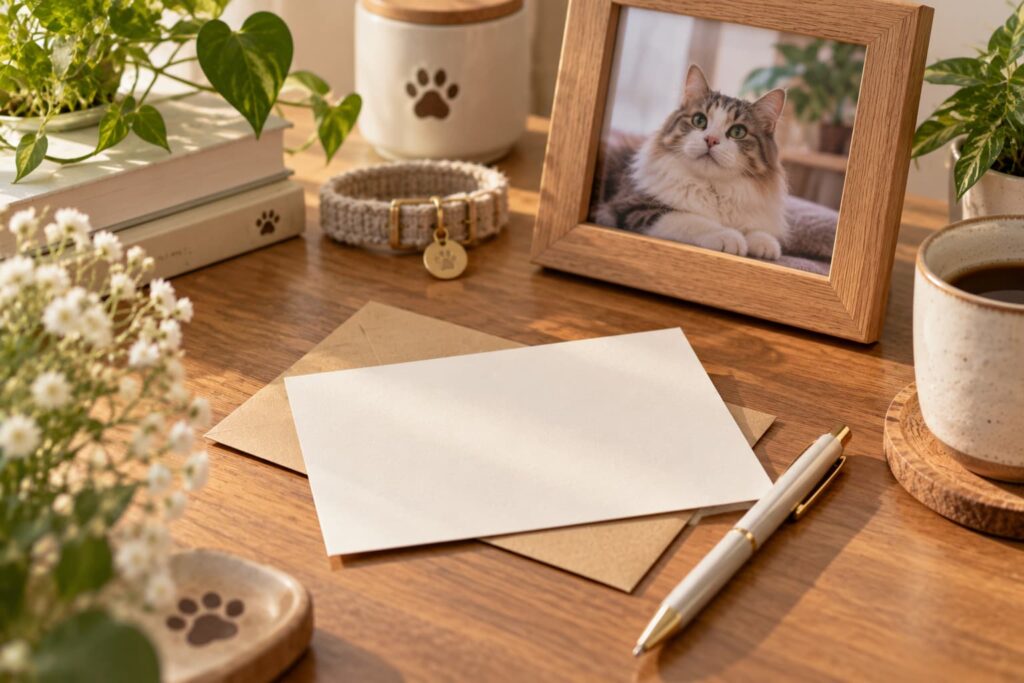
A sympathy card, a handwritten note, a favorite photograph, or a small keepsake can provide another way to acknowledge the relationship someone shared with their pet.
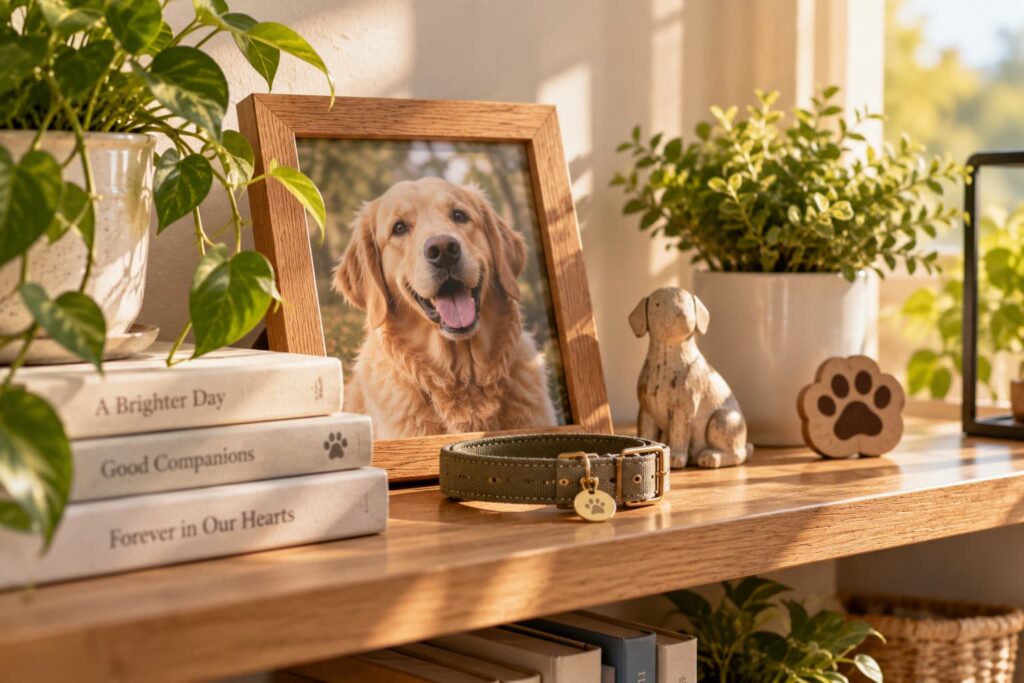
Remembering a pet can take many forms. Some people keep photographs or meaningful objects, while others create a more permanent memorial that gives them a physical reminder of the life they shared.
The American Veterinary Medical Association discusses remembering pets through photographs, mementos, tributes, and other personal ways of honoring the relationship. AVMA’s Pet Loss & Grief resources also emphasize that the grieving process is personal and that people may find different forms of remembrance meaningful.
A keepsake doesn’t have to be elaborate. It could be something as simple as a favorite photograph or a small item that reminds someone of an everyday moment.
For someone who has lost a beloved companion, preserving those memories can sometimes feel more meaningful than trying to find the perfect words.
If you’re looking for more ideas, you can also explore Personalized Pet Memorial Gifts: Meaningful Ways to Remember Your Pet.
A Few Final Thoughts
When someone loses a pet, you don’t need to have the perfect thing to say.
A sincere:
“I’m sorry. I know how much they meant to you.”
can mean much more than an elaborate message that doesn’t feel genuine.
Use the pet’s name when you can. Mention a memory if you have one. Listen if they want to talk. And most importantly, don’t feel that you need to make their grief disappear.
Sometimes the kindest thing you can offer is simply the knowledge that someone else remembers their pet, too.
Pet Loss Sympathy Message FAQ
What is a good sympathy message for someone who lost a pet?
A good message is sincere, simple, and acknowledges the importance of the pet. For example: “I’m so sorry for your loss. I know how much [Pet’s Name] meant to you, and I’m thinking of you.”
What should I say to a friend whose pet died?
Acknowledge the loss, mention the pet by name if you know it, and offer support. If you have a personal memory of the pet, sharing it can make your message more meaningful.
Should I mention the pet’s name in a sympathy message?
Yes, if you know the pet’s name and feel comfortable using it. Mentioning the name can make the message feel more personal and recognize the pet as an individual companion.
Is it appropriate to send a pet loss sympathy card?
Yes. A sympathy card can be a thoughtful way to acknowledge someone’s loss, especially when you aren’t able to speak with them in person.
What should I avoid saying to someone grieving a pet?
Try to avoid minimizing the loss or rushing the person toward moving on. Statements such as “You can always get another pet” may be intended kindly but can make someone feel that their grief isn’t being fully understood.